Ernest Hemingway
American novelist and 1954 Nobel laureate (1899–1961) known for The Sun Also Rises, A Farewell to Arms and The Old Man and the Sea.
Notable work: The Old Man and the Sea
About Ernest Hemingway
Ernest Hemingway grew up in Oak Park, Illinois, and started as a cub reporter at The Kansas City Star. In 1918, while driving an ambulance for the Red Cross on the Italian front, he was badly wounded by shrapnel, the experience behind A Farewell to Arms (1929). In 1920s Paris, with Gertrude Stein as a mentor, he published the stories of In Our Time (1925) and his first novel, The Sun Also Rises (1926), about expatriates who travel from Paris to the San Fermín festival in Pamplona. That novel popularized Stein's label “the Lost Generation.”
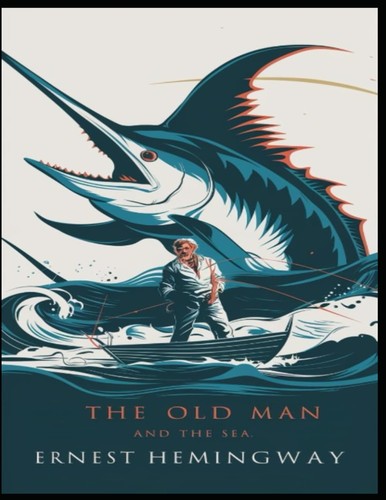
He called his method the iceberg theory: put the surface facts on the page and leave the larger meaning beneath them, unstated. Covering the Spanish Civil War gave him For Whom the Bell Tolls (1940), about an American demolitions expert attached to a Republican guerrilla unit. The Old Man and the Sea (1952), a novella about an aging fisherman named Santiago, won the Pulitzer Prize in 1953 and was cited when he received the 1954 Nobel Prize in Literature. He published seven novels, six story collections and two nonfiction books. He died by suicide in Ketchum, Idaho, in 1961, and his memoir of Paris in the 1920s, A Moveable Feast, appeared in 1964.
Where to Start With Ernest Hemingway
Start with The Old Man and the Sea. It is a novella, the Nobel citation singled it out, and its plain sentences make his technique easy to see. Then read The Sun Also Rises, which applies the same restraint at novel length to a group of expatriates moving between France and Spain.
To sample him before committing to a novel, try the short stories. “Hills Like White Elephants,” first collected in Men Without Women (1927), is a brief conversation between a couple waiting for a train in Spain, in which the subject, an operation implied to be an abortion, is never named outright. It is the clearest small demonstration of the iceberg theory.
How the Books Connect
None of Hemingway's novels share a story, so no order is required. Publication order does show a progression, from the 1920s books built on his war and expatriate years, through For Whom the Bell Tolls, to the compressed late novella. A Moveable Feast is best read after The Sun Also Rises, since it revisits the same Paris years. Two of his best-known stories, “The Snows of Kilimanjaro” and “The Short Happy Life of Francis Macomber,” came out of the same African safari as his nonfiction book Green Hills of Africa.
Key Works
- In Our Time (1925)
- The Sun Also Rises (1926)
- Men Without Women (1927)
- A Farewell to Arms (1929)
- For Whom the Bell Tolls (1940)
- The Old Man and the Sea (1952)
- A Moveable Feast (1964)
Books by Ernest Hemingway




All books loaded