George Orwell
English writer Eric Blair (1903–1950), known as George Orwell, author of Animal Farm, Nineteen Eighty-Four and essays on politics and language.
Notable work: 1984
About George Orwell
George Orwell was the pen name of Eric Arthur Blair, born in 1903 in Motihari, in British India. After a scholarship to Eton he joined the Imperial Police in Burma, the source of his first novel, Burmese Days (1934), and the essays “A Hanging” and “Shooting an Elephant.” His first book, Down and Out in Paris and London (1933), describes the menial jobs he took, including dishwashing in a Paris hotel, and The Road to Wigan Pier (1937) documents working-class life in industrial northern England.
In the Spanish Civil War he fought on the Republican side and was shot in the throat by a sniper; Homage to Catalonia (1938) records that war, which he later called his political watershed. From 1936 on, he wrote, all his serious work was aimed against totalitarianism and for democratic socialism. Animal Farm (1945), a beast fable in which a farm animals' rebellion is hijacked by the pigs, made him famous; he described it as a satire against Stalin. He worked on Nineteen Eighty-Four (1949) at a remote farmhouse on the Hebridean island of Jura, and died of complications of tuberculosis in January 1950, at 46. “Orwellian,” “Big Brother,” “doublethink” and “Thought Police” entered the language through his work.
Where to Start With George Orwell
Start with Animal Farm. It is a novella with a plain surface, and it introduces his central concern, how a revolution's ideals are captured by the people who claim to serve them, before the bleaker Nineteen Eighty-Four. Read Nineteen Eighty-Four second: a longer, harder book about surveillance, propaganda and the control of truth, whose vocabulary most readers already half know.
Then go to the nonfiction and essays, which critics rate highly in their own right. Homage to Catalonia shows the war that shaped both novels. “Shooting an Elephant” (1936) covers his time as a colonial policeman, and “Politics and the English Language” (1946) argues that vague, inflated writing is a tool of political manipulation.
How the Books Connect
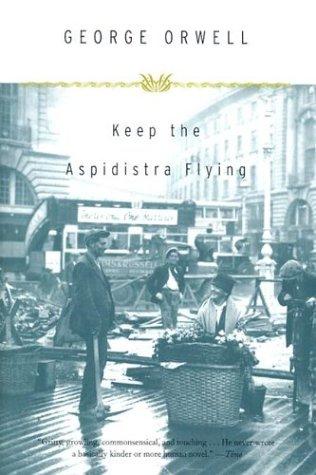
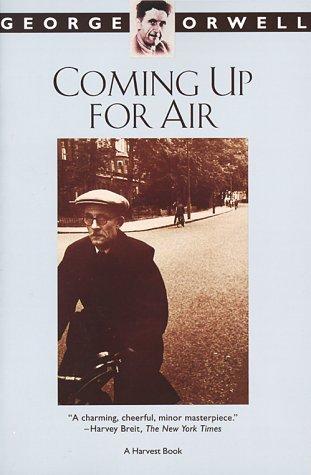
Orwell's books are unconnected, so there is no series order. A practical route is the two famous novels first, then Homage to Catalonia, then the essays. His four 1930s novels, Burmese Days (1934), A Clergyman's Daughter (1935), Keep the Aspidistra Flying (1936) and Coming Up for Air (1939), get less attention but show his concerns with empire, class and money taking shape before the war.
Key Works
- Down and Out in Paris and London (1933)
- Burmese Days (1934)
- Shooting an Elephant (essay) (1936)
- The Road to Wigan Pier (1937)
- Homage to Catalonia (1938)
- Animal Farm (1945)
- Politics and the English Language (essay) (1946)
- Nineteen Eighty-Four (1949)
Books by George Orwell


All books loaded