Victor Hugo
French Romantic novelist, poet and playwright (1802–1885), author of The Hunchback of Notre-Dame and Les Misérables.
Notable work: Les Misérables
About Victor Hugo
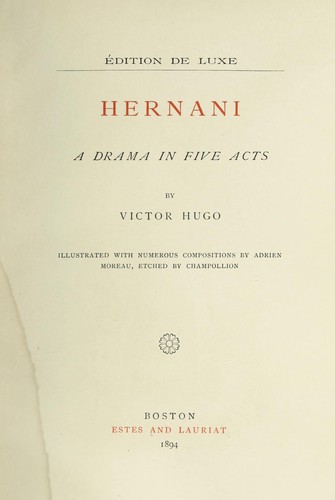
Victor Hugo was born in Besançon in 1802 and became the figurehead of French Romanticism through the theater: Cromwell (1827) and Hernani (1830), whose performances at the Comédie-Française set off several nights of rioting between romantics and traditionalists. His first major novel, Notre-Dame de Paris (1831), known in English as The Hunchback of Notre-Dame, centers on Quasimodo and the cathedral itself. In France he is equally known for poetry, especially Les Contemplations and La Légende des siècles.
He was also a politician. Elected to the Académie française in 1841 and to the upper chamber in 1845, he spoke against the death penalty and social injustice, a cause he had already taken up in the novella The Last Day of a Condemned Man (1829). When Louis Napoleon seized complete power in 1851, Hugo denounced him and left France, settling at Hauteville House on Guernsey from 1855 until 1870. Les Misérables (1862) and Toilers of the Sea (1866), dedicated to Guernsey, were published in those years. He returned to Paris after Napoleon III fell, died in May 1885, and was given a state funeral in the Panthéon attended by more than two million people.
Where to Start With Victor Hugo
Start with The Hunchback of Notre-Dame. It is far shorter than Les Misérables and a fair test of whether his style suits you before you commit to the longer book. Then read Les Misérables in an unabridged translation. More than a quarter of it, by one count 955 of 2,783 pages, is essays that do not advance the plot, including 19 chapters on the Battle of Waterloo and sections on the Paris sewers and convents. Abridged editions cut these, but they are part of the book's design.
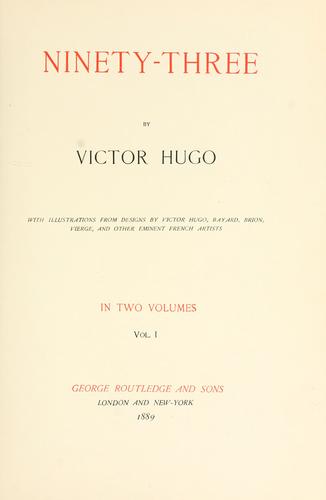
If Les Misérables feels like too much, Ninety-Three (1874), his last novel, set in 1793 during the royalist revolt in the Vendée and Brittany, is a more contained story of the Revolution.
How the Books Connect
There is no series; every Hugo novel stands alone and can be read in any order. Publication order does track his life: The Last Day of a Condemned Man and Notre-Dame de Paris came early, before his political career and exile, while Les Misérables, Toilers of the Sea and The Man Who Laughs (1869, set in England from 1690) appeared during his years on Guernsey, and Ninety-Three after his return. English titles vary by translation, so check the original French title (for example L'Homme qui rit or Quatrevingt-treize) when comparing editions.
Key Works
- The Last Day of a Condemned Man (1829)
- The Hunchback of Notre-Dame (Notre-Dame de Paris) (1831)
- Les Misérables (1862)
- Toilers of the Sea (1866)
- The Man Who Laughs (1869)
- Ninety-Three (1874)
Books by Victor Hugo




All books loaded